
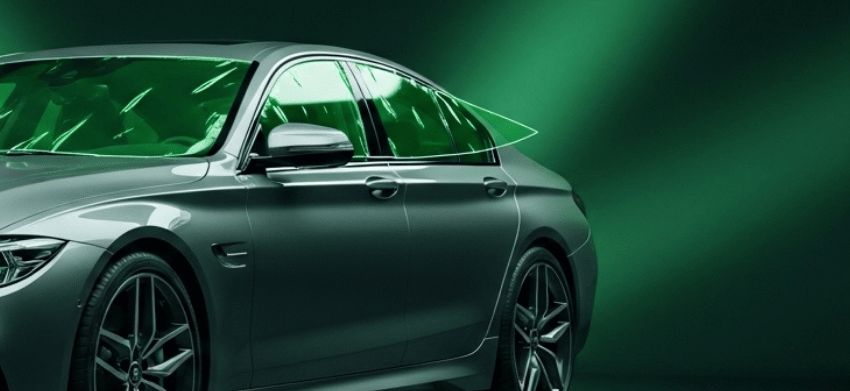
One of the most common questions among car owners is: Does Paint Protection Film make the car resistant to dents? Or is it simply a transparent layer that protects against minor scratches? The confusion arises from not distinguishing between two different types of damage: surface scratches and strong impacts.
Paint Protection Film is designed to handle a specific range of mechanical effects, but it has clear limitations determined by the material’s nature, thickness, and construction. Understanding these boundaries is essential to determine whether PPF is suitable for your needs.
How Paint Protection Film (PPF) Works: Absorbing Friction and Protecting the Paint
Paint Protection Film consists of multiple layers of flexible, transparent polymer carefully applied over the vehicle’s original factory paint. It acts as a protective barrier that separates the paint from external elements.
Its function goes beyond simple coverage — it absorbs and distributes the energy of friction over a wider area instead of allowing it to concentrate at a single point, thereby reducing the chance of the scratch penetrating the original paint layer.
When exposed to light friction or washing-related contact, the film’s outer surface temporarily deforms to absorb the impact, while the paint underneath remains protected. This mechanism is why PPF is known as a “sacrificial layer,” as it takes the damage instead of the original paint.
Advanced types of PPF feature self-healing technology, which allows the surface layer to return to its original state when exposed to heat from sunlight or warm water. This helps minor surface scratches disappear and maintains the glossy appearance for longer.
However, the role of the film remains within surface-level protection only — effectively resisting low-intensity scratches and abrasions, but not absorbing strong impacts or preventing dents from direct collisions.
The Difference Between Scratches and Impacts: Why the Concepts Get Mixed Up
Scratches result from relatively low-energy friction, such as door dings in tight parking spaces or small stones kicked up while driving. This is the primary area where Paint Protection Film performs with high efficiency.
Strong impacts, on the other hand, are high-energy mechanical forces that can cause dents or structural damage to the vehicle’s body panels. In such cases, PPF cannot prevent structural damage because it is designed for surface protection, not for withstanding accidents.
This common mix-up leads some owners to expect unrealistic performance from the film. A clear understanding of its capabilities sets realistic expectations and prevents disappointment after installation.
Levels of Protection in Paint Protection Film (PPF): Light, Medium, or Strong?
The level of protection provided by PPF varies according to film thickness and the quality of its internal layers. Not all films offer the same degree of resistance. Greater thickness improves abrasion resistance, but it does not turn the car into an impact-resistant structure.
Choosing the right type depends on the vehicle’s usage and the driving environment.
- Light Protection: Suitable for city driving and resisting minor surface scratches.
- Medium Protection: Offers greater thickness to absorb relatively stronger friction.
- Strong Protection: Features more advanced layers for better resistance to surface impacts, without preventing dents from direct hits.
Does Paint Protection Film Protect Against Everyday Friction?
Everyday friction is the number one enemy of a car’s paint. This is where PPF shows its true effectiveness by acting as a sacrificial layer that receives the damage instead of the original paint.
In many cases, only the damaged section of the film can be replaced without needing to repaint the entire vehicle, helping preserve the original paint’s value.
PPF is highly effective at resisting low-intensity daily abrasions, such as:
- Door rubs in tight parking spots and light contact with barriers
- Small stones and road debris while driving
- Marks from improper washing or cleaning
Does Paint Protection Film Prevent Cracks or Strong Impacts? Know the Real Protection Limits Before Deciding
It is important to clarify a key point: Paint Protection Film is not a safety measure against accidents. If the vehicle is subjected to a strong impact that causes dents or breakage in external panels, the film will not prevent this structural damage.
What PPF can do is reduce the surface scratches associated with the initial contact. In other words, the film helps minimize scratching from the impact, but it cannot stop the force itself from affecting the vehicle’s underlying structure.
When Do You Need Additional Protection Alongside PPF?
In certain situations, you may require extra solutions if you frequently drive on rough roads or expose your vehicle to consistently harsh conditions. In these cases, combining PPF with other protections such as glass protection or thermal insulation can enhance the overall defense of the vehicle.
Additional protection may be beneficial when:
- Driving on gravel-heavy roads
- Using the vehicle for intensive commercial purposes
- Facing continuous exposure to severe environmental conditions
- Seeking multi-layered comprehensive protection
How to Choose the Right Protection Level in Paint Protection Film (PPF) for Your Car’s Paint
The decision should not be random. The needs of a city-driven car differ from those of a vehicle used for long highway journeys. Selecting the appropriate thickness and type of film should follow a proper assessment of your driving environment and usage patterns.
Consulting with a specialized center like Hammam Company helps determine the most suitable solution based on realistic needs, rather than assuming every car requires the highest level of protection.
The Role of Professional Installation in Applying Paint Protection Film (PPF) – Hammam Company’s Expertise
Even the best Paint Protection Film may not deliver the desired results if not installed according to precise standards. Accuracy in cutting, cleanliness of the work environment, and prevention of air or contaminants trapped under the film directly affect performance and longevity.
Relying on a specialized center like Hammam Company ensures the use of original materials and professional execution that maintains the film’s efficiency and reduces the likelihood of future issues.
Paint Protection Film provides effective protection against scratches and everyday abrasions, but it is not a substitute for the vehicle’s safety systems or structural protection. Understanding the exact nature of the protection it offers helps you make an informed decision based on the product’s real capabilities.
Choosing the right quality and professional installation play a vital role in achieving the best possible performance. Therefore, PPF should be viewed as a supportive solution for paint protection and maintaining your car’s appearance over time, rather than a complete shield against all types of damage.